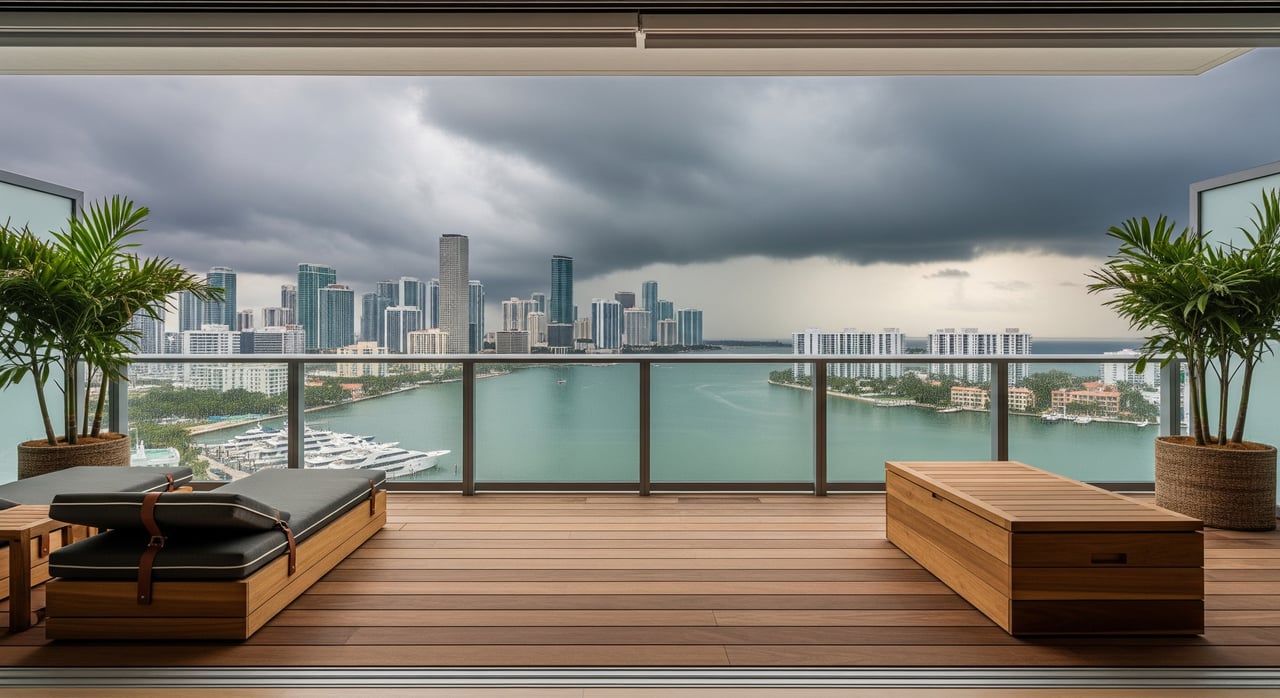
Hurricane prep in a Brickell high rise can feel overwhelming, especially if you split time between cities or manage a rental. You want a clear plan that works with your building’s rules and keeps your investment protected. This guide gives you a practical checklist for pre-season and pre-storm prep, plus insurance and HOA coordination tips tailored to Brickell. Let’s dive in.
Know your risk in Brickell
Brickell sits on Biscayne Bay in Miami, within Miami-Dade County’s high exposure zone for tropical storms and hurricanes. Hurricane season runs from June 1 to November 30 each year, and you should track official updates through the National Hurricane Center.
Many Brickell towers have impact-rated windows while some older buildings still depend on shutters. Miami-Dade County is in a High-Velocity Hurricane Zone, so windows and exterior doors must meet strict impact standards when installed or replaced. Your building’s age and policy will determine whether you deploy shutters or rely on impact glass.
Plan for building service interruptions. Elevators often shut down before landfall, and generators usually power only life-safety systems and limited lighting. Associations typically require you to clear balconies before storms, and they may fine owners if items become windborne projectiles. Flood risk is separate from wind damage, and standard policies do not cover flood.
Pre-season checklist (April–May)
Get ahead of the season before June 1. Focus on documents, insurance, and basic maintenance.
Review building rules and plans
- Request the condo declaration, bylaws, rules, and the association emergency plan.
- Confirm the association’s communication channels for alerts and re-entry notices.
- Ask for a current master insurance policy declarations page and the agent contact.
Organize your insurance and records
- Verify your HO-6 coverage, loss assessment coverage, and any flood policy.
- Note policy numbers, deductible amounts, and your insurance agent’s contact.
- Build a digital and physical folder with policy declarations, a photo/video inventory, receipts for upgrades, your deed, and any current lease.
Prepare your unit
- Inspect windows and doors. Confirm if you have impact glass or need shutters.
- Service HVAC, clean filters, and check condensate pans to reduce leak risks.
- Label circuit breakers and add surge protection for sensitive electronics.
- Find your unit-level water shutoff valve and test it.
If you’re a landlord
- Add a hurricane clause to leases that covers balcony items, access for inspections, and renter responsibilities. Encourage renters insurance.
- Provide tenants with the building’s emergency contacts and rules.
- Keep a tenant contact list and secure, legal duplicate key access.
Pre-storm timeline in Brickell
When a watch or warning is issued, use a clear 72, 48, and 24-hour sequence to avoid last-minute stress.
72 hours before expected impact
- Refill prescriptions, stock pet supplies, and get cash. Fuel your vehicle.
- Back up your docs and store copies in the cloud.
- Move valuables and records to higher shelves or a safe deposit box.
- Ask management about generator coverage, water availability, and re-entry plans. Confirm evacuation guidance from the county.
48 to 24 hours before
- Remove or secure all balcony items. Store offsite if your HOA requires it or if storm surge is possible.
- Close and lock windows and doors. Deploy shutters if required by your building.
- Unplug nonessential electronics. Charge phones and portable power banks.
- If advised by management, shut off water at your unit valve.
- Tenants should follow landlord and association instructions for prep and balcony clearing.
Final hours
- Monitor official updates and building messages. Keep your phone charged.
- Take time-stamped photos of your interior and balcony for your records.
- Follow evacuation orders. If staying, move to an interior area away from windows.
After the storm
Follow association directions on building access, elevator status, and safety checks. Re-entry may take time while engineers inspect the structure and life-safety systems.
Document damage as soon as it is safe. Take photos and videos before discarding items unless there is a safety hazard. Report losses promptly to your insurer and to building management, and keep a log of calls and claim numbers.
If water intrusion occurs, start drying and ventilation quickly to reduce mold growth. For landlords, check on tenant safety, temporary housing needs, and document any tenant-caused versus building-caused issues.
Insurance must-knows for Brickell condos
Condo coverage involves the association’s master policy plus your HO-6, and often a separate flood policy.
Association master policy
- Coverage scope varies. Some policies are all-in, others are bare walls-in. Confirm where the association’s coverage stops inside your unit.
- Hurricane and wind deductibles are usually a percentage of the building’s insured value. High deductibles can lead to owner loss assessments after a covered event.
Your HO-6 policy
- Cover interior finishes, built-ins, and personal property as needed based on your building’s policy.
- Add adequate loss assessment coverage to help with your share of a master policy deductible or special assessment.
Flood insurance
- Standard condo policies do not cover flood. Consider an NFIP or private flood policy for contents and interior improvements.
- New NFIP policies usually have a 30-day waiting period, so buy well before the season.
Claims coordination
- You may need to file claims with both the association’s insurer and your own. Ask management for the association claim number and share it with your carrier.
- Notify your mortgage company as required by your policy’s mortgagee clause.
Coordinate with your association
A smooth recovery depends on clear communication and aligned expectations.
What to request now
- Emergency operations plan, contacts for the property manager and building engineer, and communication protocols.
- Master policy declarations, deductible details, and claim procedures.
- Rules for shutters, balcony items, and re-entry.
What to expect pre- and post-storm
- Management may control or shut elevators and limit access until safety checks are complete.
- Restoration prioritizes structure and life safety before unit interiors.
- If common deductibles are large, special assessments may be necessary. Ask about reserve levels and the disaster finance plan.
Governance steps for owners and landlords
- Request a Q&A session on hurricane readiness.
- Confirm how tenants will receive building alerts and what access owners have after an emergency.
High-rise and balcony tips
Balconies are a frequent source of damage in high winds. Treat them as part of your storm plan.
- Remove all loose items during warnings or per seasonal rules.
- Do not install exterior attachments or shutters without association approval and proper permits.
- Impact glass reduces break risk but does not eliminate water intrusion during extreme events. Plan for towels, barriers, and drying.
- If your items become projectiles, you could face liability for damage to common areas or neighbor units.
Quick prep checklist
Use this short list to double-check your readiness.
- Association docs and emergency plan on file
- Master policy declarations and agent contact saved
- HO-6, loss assessment, and flood policy confirmed
- Photo/video inventory with receipts for upgrades
- Window type verified and shutter plan set
- Unit water shutoff located and tested
- Balcony cleared plan and storage arranged
- Surge protectors and device chargers on hand
- Tenant hurricane clause, contacts, and renters insurance guidance in place
Trusted resources
Use these authoritative sources for real-time updates and detailed guidance.
- Check the National Hurricane Center for forecasts and official hurricane season information through the National Hurricane Center.
- Find local alerts, evacuation zones, and shelters at Miami-Dade County Emergency Management.
- Review flood maps and risk at FEMA’s Flood Map Service Center and learn about flood coverage through FloodSmart.
- See statewide preparedness guidance at the Florida Division of Emergency Management.
- Understand condo law basics in Florida Statutes Chapter 718 via the Florida Condominium Act.
- Get consumer insurance guidance or file complaints with the Florida Office of Insurance Regulation.
- Learn about impact-rated products and approvals at Miami-Dade County Building/Product Control.
Ready to build your custom plan for your Brickell condo or rental? Reach out to Capdevila Realty for bilingual, responsive guidance that aligns with your building’s rules and your insurance needs. Let’s Connect.
FAQs
What evacuation resources should Brickell condo owners use?
- Follow county alerts and evacuation zone updates through Miami-Dade County Emergency Management and track forecasts with the National Hurricane Center.
Do I still need shutters if my Brickell condo has impact glass?
- Impact glass reduces breakage risk, but building rules may still require shutters or specific procedures. Confirm your association’s policy and follow its guidance.
What should I do with balcony furniture before a storm?
- Remove all items from balconies during warnings or as required by your HOA. Many associations prohibit any loose items due to windborne debris risks.
How do condo and HO-6 deductibles affect me after a hurricane?
- The association’s hurricane deductible can trigger a loss assessment to owners. Your HO-6 loss assessment coverage can help cover your share, subject to policy limits.
Is flood damage covered by my standard condo policy?
- No. Flood is a separate risk and requires its own policy through NFIP or private insurers. Consider coverage well before season due to possible waiting periods.
Will elevators and building services be available after a storm?
- Expect elevators and nonessential services to be limited or shut down until engineers complete safety checks. Generators often power only life safety and select systems.