Do you love old-world character paired with easy, outdoor living? If arched doorways, terracotta roofs, and shady courtyards speak to you, Coral Gables may feel like home from the first stroll. This garden city was planned for beauty and comfort, so the look you admire is not an accident. In this guide, you will learn what Mediterranean Revival living means in Coral Gables, how it shapes daily life, and what to expect as a buyer or seller in this timeless market. Let’s dive in.
Mediterranean Revival basics
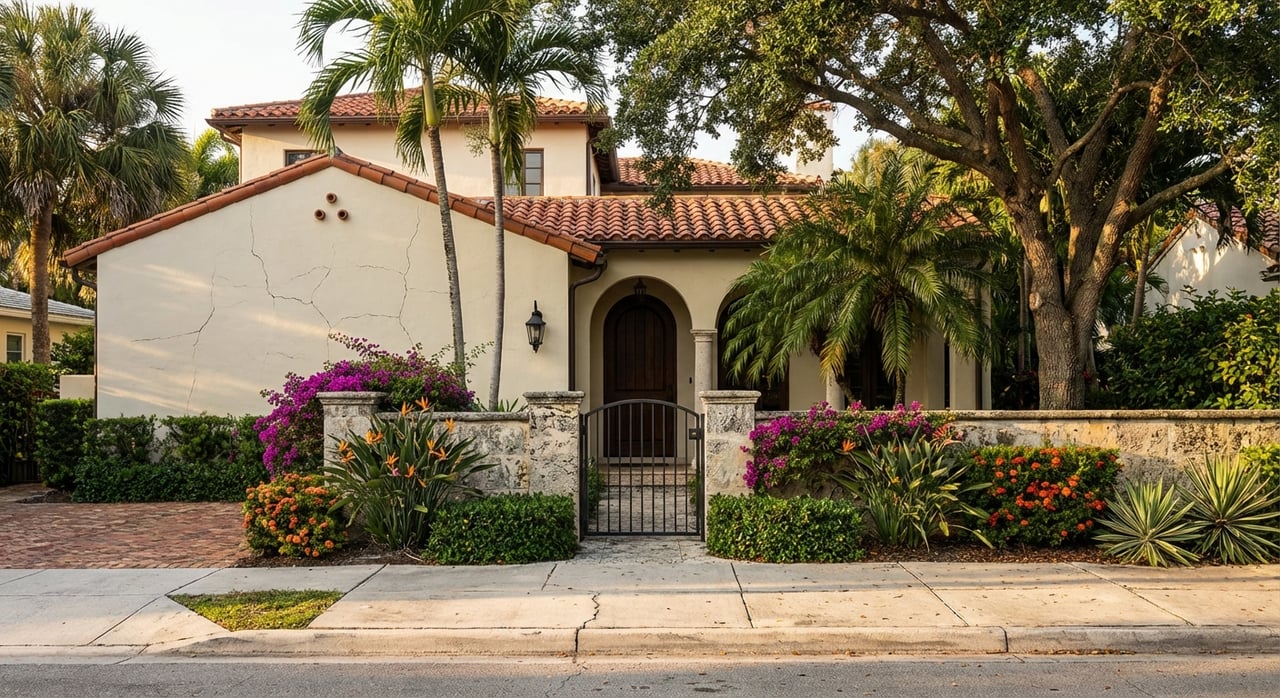
Mediterranean Revival is a warm, tactile style that fits South Florida’s climate. You see smooth stucco walls in pale tones, red barrel tile roofs, and arched windows that soften the light. Iron balconies and gates add craft and texture. Courtyards, loggias, and shaded patios invite you outside in every season.
This style is more than curb appeal. It is a set of design moves that make homes comfortable and gracious. Thick stucco walls help with heat, shaded porches encourage breezes, and tile underfoot feels cool at mid-day. The result is a simple idea: indoor and outdoor rooms that work as one.
Hallmark features you can spot
- Smooth stucco exteriors in warm neutrals
- Terracotta or Ludowici clay tile roofs
- Rounded arches at doors, windows, and arcades
- Courtyards, loggias, and covered patios for shade
- Decorative tilework on stairs and fountains
- Hand-wrought iron balconies and gates
- Carved stone accents, often local coral rock, and heavy wood doors
Streetscape and canopy
Coral Gables was planned around wide, tree-lined boulevards and small plazas that feel human in scale. The city maintains a significant urban canopy, with city materials citing more than 40 percent tree coverage and a long-running Tree City USA designation. You feel that shade on morning walks, along with the rhythm of stucco walls, tiled roofs, and coral rock markers that give the streets a distinct identity.
City Beautiful origins
Coral Gables did not grow by chance. In the early 1920s, developer George E. Merrick shaped a “City Beautiful” plan that set out a clear vision for coordinated streets, civic spaces, and Mediterranean-influenced architecture. The city was incorporated in 1925 and that original playbook still guides what you see today.
Anchors from the 1920s continue to define the place. The Venetian Pool, transformed from a coral rock quarry, pairs grottoes with bridges to create a civic jewel. The Miami Biltmore Hotel opened in January 1926, with a tower inspired by Seville’s Giralda, and it remains a focal point. The University of Miami established its main campus in Coral Gables in 1925, bringing culture, sports, and energy to the community. These places are not just postcard moments. They help set the tone for everyday life.
Daily life and anchors
Mediterranean Revival living in Coral Gables blends charm with daily convenience. You can grab coffee, browse boutiques, and catch a show along Miracle Mile, the palm-lined main street of downtown. A short walk away, the Shops at Merrick Park offers open-air, high-end retail in a lush setting.
Weekends often center on nature and culture. Families cool off at the historic Venetian Pool, spend time at Fairchild Tropical Botanic Garden, or relax at Matheson Hammock Park. The Biltmore hosts events and draws visitors to its grand public spaces. The University of Miami adds concerts, galleries, and games to the calendar throughout the year. Together, these anchors support steady foot traffic and a walkable village vibe, even though you are minutes from central Miami.
Design rules and preservation
One reason Coral Gables looks and feels cohesive is the city’s approach to design review. There is a formal historic preservation program with tools like local designation, a Historic Preservation Board, and Certificates of Appropriateness for exterior changes. A Board of Architects also reviews many projects for compatibility with the city’s established aesthetic.
If you plan exterior work on a historically designated property, expect to follow published guidelines and secure approvals before starting. Tree removals on public property or in rights-of-way require permits. These steps help protect neighborhood character, the tree canopy, and long-term value. The result is development that fits the fabric, rather than fighting it.
Zoning and scale
Downtown overlay standards and mixed-use district rules help keep streets human in scale. Along Miracle Mile and nearby blocks, the code uses height, setback, and stepback requirements, along with a Coral Gables Mediterranean design standard, to ensure compatible streetscapes. New projects are reviewed for style and massing so that the low-rise feel extends from residential streets to commercial corridors. For you, that means the charming blocks you fall in love with are treated as assets to protect.
Market snapshot and value
Typical home values in Coral Gables are well above the county median. Zillow’s Coral Gables typical home value was around 1.4 to 1.5 million dollars in data through late 2025. Prices shift over time, but the pattern is consistent. Buyers pay a premium for the blend of architecture, canopy, parks, and regulated growth that defines the city. Preservation and design standards often support price stability and desirability, which helps both long-term owners and sellers.
If you are considering a move, ask for the latest figures on median sale price, days on market, and active inventory. Your strategy may change based on micro-markets within the city and the historical status of a property.
Buyer tips for Coral Gables
How to shop smart
- Confirm historic status early. If a home is locally designated or in a designated district, plan for review of exterior changes.
- Study the outdoor rooms. Courtyards, loggias, and patios are extensions of living space, so consider sun angle and breeze.
- Look for original details. Intact tilework, iron balconies, and carved stone add lasting appeal.
- Check roof and stucco condition. Clay tile roofs and stucco need proper maintenance to perform well in a humid climate.
- Review permits and past approvals. Understanding prior Certificates of Appropriateness can guide your renovation timeline.
- Consider the landscape. Mature canopy adds comfort and value, and removals on public property or rights-of-way require permits.
Financing and due diligence
- Budget for specialized materials. Authentic clay tile and custom ironwork can carry higher costs, so factor that into your plan.
- Inspect for water management. Gutters, scuppers, and grading should push water away from stucco and foundations.
- Evaluate insurance needs. A seasoned agent can connect you with local pros who understand historic construction.
Seller tips that win buyers
Market the heritage
- Lead with authentic details. Highlight arches, loggias, tile risers, and coral rock accents in your listing copy and photos.
- Capture indoor-outdoor flow. Professional media that shows courtyards at golden hour helps buyers feel the lifestyle.
- Stage with texture. Light linens, wood, and simple ceramics frame stucco and stone without visual clutter.
- Clarify improvements. Provide a clean list of permitted work and any Certificates of Appropriateness to build buyer confidence.
A digital-first marketing plan matters here. Premium photography, video, and virtual tours help buyers appreciate materials and scale before they step inside. That is especially valuable for out-of-area buyers who are comparing Coral Gables to other Miami neighborhoods.
Neighborhood contrasts
How does Coral Gables compare to Brickell, Downtown, or Miami Beach? Coral Gables is a planned garden city with low-rise blocks, Mediterranean Revival architecture, and leafy streets. Brickell and Downtown are high-rise financial and residential cores with a vertical skyline. Miami Beach is best known for Art Deco landmarks and waterfront resort life. Zoning and design standards reflect these differences. If you want classic, low-rise streets with strong design continuity, Coral Gables delivers a distinct experience.
Why it endures
The long arc of planning, preservation, and landscape care gives Coral Gables a rare balance. You get the grace of historic materials, the comfort of shaded streets, and daily amenities close at hand. From Miracle Mile to the Venetian Pool and the Biltmore, the city’s anchors create a steady rhythm of life that feels both refined and relaxed.
If that sounds like your next chapter, a local-aligned, cross-market team can help you evaluate options with clarity. We provide bilingual guidance, professional listing marketing, and streamlined coordination for buyers and sellers who want a confident move in Miami.
Ready to explore Mediterranean Revival living in Coral Gables? Connect with a trusted advisor who brings premium marketing and hands-on service. Reach out to Capdevila Realty to start the conversation. Hablamos español.
FAQs
What is Mediterranean Revival in Coral Gables?
- It is a style defined by stucco walls, red barrel tile roofs, arches, wrought iron, tiled fountains, and shaded courtyards, all adapted to South Florida living.
Are exterior changes to historic homes restricted in Coral Gables?
- Yes, many exterior changes on locally designated properties require review and a Certificate of Appropriateness through the city’s historic preservation process.
How do Coral Gables design rules affect new downtown projects?
- The city uses Mediterranean design standards, along with height, setback, and stepback requirements, so new buildings fit the established low-rise, human-scale streets.
What cultural anchors shape daily life in Coral Gables?
- The Venetian Pool, Miami Biltmore Hotel, Miracle Mile, the Shops at Merrick Park, the University of Miami, Fairchild Tropical Botanic Garden, and Matheson Hammock Park.
How do Coral Gables home prices compare to the county?
- Typical Coral Gables home values are higher than the Miami-Dade median, with Zillow showing about 1.4 to 1.5 million dollars in data through late 2025.